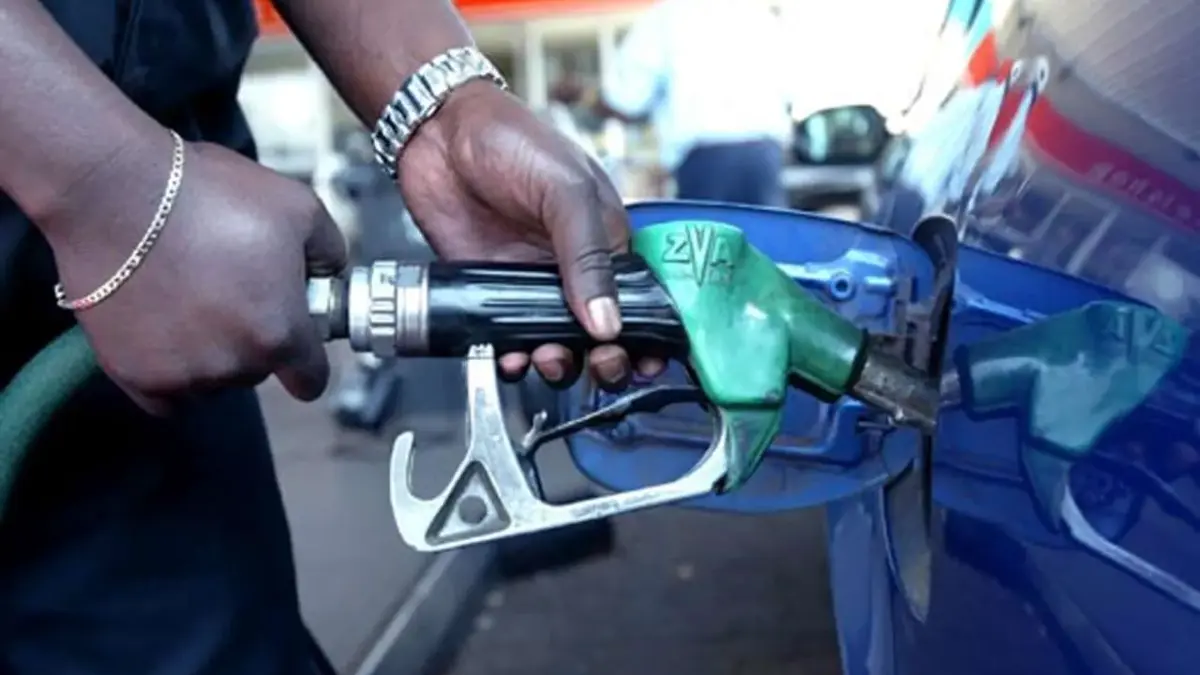
The Federal Government has announced a 30-day petrol discount at Nigerian National Petroleum Company Limited (NNPC) retail stations, with priority for public transport operators, as part of fresh measures to ease rising fuel prices and the cost-of-living crisis.
The intervention, announced by the Minister of Finance and Coordinating Minister of the Economy, Taiwo Oyedele, is designed to reduce the immediate burden of high petrol prices on Nigerian households, transport operators and businesses.
Under the arrangement, NNPC Retail will forgo its petrol retail profit margin and sell fuel at cost for an initial period of 30 days. The Presidency said the initiative was approved by President Bola Tinubu in response to rising global crude oil prices and volatility in international energy markets.
The announcement was made in Abuja on Thursday, October 8, 2026, as the government unveiled a wider package of interventions aimed at stabilising fuel prices and reducing the impact of higher transportation and logistics costs.
According to the government, the temporary discount is intended to provide relief without restoring the nationwide petrol subsidy that was removed in May 2023.
How the 30-Day Petrol Discount Will Work
The Federal Government said NNPC Retail would sell petrol at its landing cost during the intervention period rather than add its usual retail profit margin.
This means the discount will depend on the company’s actual fuel costs. For example, if NNPC’s landing cost for petrol is ₦1,300 per litre, the company would sell it at that price under the arrangement, rather than add a retail profit margin.
Public transport operators will receive priority under the scheme, although the government has not publicly specified a complete eligibility framework, the exact discount per litre or the procedures transport operators must follow to access the benefit.
The initiative is expected to help reduce pressure on commercial transport operators, who face higher operating expenses when petrol prices rise. If transporters pass the savings on to passengers, commuters could also benefit from lower transport fares.
However, the actual savings for motorists and passengers will depend on the prevailing cost of petrol, the participating NNPC stations and how transport operators respond to the discount.
The government has not announced a single nationwide pump price that will apply throughout the 30-day period.
FG Says Discount Is Not a Return to Fuel Subsidy
The government has rejected suggestions that the temporary discount represents a reversal of the fuel subsidy removal policy.
Oyedele said the arrangement is based on NNPC Retail giving up its retail profit margin rather than the government paying the difference between the market price and a regulated pump price.
The Presidency also maintained that the intervention should not be interpreted as a restoration of the former blanket subsidy system, which ended on May 29, 2023.
The government argued that restoring the previous subsidy arrangement could create significant pressure on public finances and the foreign exchange market because crude oil, shipping and refining inputs are priced internationally, largely in US dollars.
Instead, officials say the new measures are intended to cushion the effects of temporary global energy shocks while preserving the broader economic reforms introduced since 2023.
The distinction has nevertheless attracted criticism from labour leaders and political opponents, some of whom argue that interventions designed to limit fuel prices could amount to a form of subsidy, regardless of the government’s description.
FG Negotiates ₦1,350 Petrol Cost Ceiling
Beyond the NNPC discount, the Federal Government said it was negotiating a ceiling of ₦1,350 per litre on the ex-gantry or landing cost of petrol.
Under the proposed mechanism, refiners and importers would absorb costs above the ceiling when international crude prices or exchange-rate movements push production and import costs higher. They could subsequently recover those losses when market conditions improve, without exceeding the agreed ceiling during the applicable period.
The government said the proposed ceiling would be reviewed monthly, with figures published to improve transparency.
The measure is intended to reduce sudden changes in petrol prices rather than permanently fix pump prices at a single level.
However, the proposed ceiling is not the same as a confirmed nationwide retail price of ₦1,350 per litre. Retail prices can also reflect distribution, transportation and other operating costs.
The final impact will depend on the implementation terms, the participation of refiners and importers, and how the arrangement affects prices at filling stations.
Other Measures to Cushion Rising Fuel Prices
The 30-day discount forms part of a wider government response to the pressure of higher energy costs on households and businesses.
According to the Presidency, the additional measures include:
1. Increased cash transfers: The government plans to increase support for vulnerable households affected by higher living costs.
2. Subsidised credit: Small businesses and consumers are expected to benefit from expanded access to subsidised credit.
3. Faster CNG deployment: The Federal Government plans to accelerate the rollout of compressed natural gas infrastructure in partnership with state governments. CNG is expected to offer transport operators a cheaper alternative to petrol where the necessary infrastructure is available.
4. Removal of illegal road levies: The government intends to work with state governments and security agencies to curb illegal taxes and charges that increase transport fares and logistics costs.
5. Possible excess-profit tax: Officials said the government would consider measures targeting operators who exploit consumers during the energy crisis. Proceeds would be directed towards transport assistance or vouchers for vulnerable urban workers.
6. Tax relief for low-income earners: The Federal Government plans to work with the National Assembly on possible additional relief under the 2027 Finance Bill.
7. Lower regulatory costs: The government also intends to reduce regulatory charges that contribute to the cost of doing business and the prices of goods and services.
8. National Strategic Fuel Reserve: The proposed reserve would allow the government to release refined petroleum products under published rules when supply disruptions or hoarding threaten market stability.
9. Forward crude sales to domestic refineries: The government plans to use forward sales of crude oil to domestic refiners to improve supply planning and reduce the exposure of domestic fuel prices to international market volatility.
The government also said it had granted waivers on taxes and duties associated with petrol, which it valued at more than ₦3.3 trillion for the year up to September 30, 2026.
Rising Global Oil Prices Behind the Intervention
The announcement comes amid renewed pressure on petrol prices following a rise in international crude oil prices and disruptions to global energy supply.
The Federal Government attributed the latest pressure partly to the conflict in the Middle East and disruptions affecting oil shipments through the Strait of Hormuz, a critical route for international energy trade.
Higher crude prices can increase the cost of supplying refined petroleum products, even in an oil-producing country such as Nigeria. Domestic fuel prices are also affected by exchange-rate movements, refining costs, freight and distribution expenses.
Nigeria’s experience since the removal of the petrol subsidy has shown that domestic pump prices remain exposed to movements in international markets.
The latest intervention therefore seeks to limit the immediate impact of these pressures while the government pursues measures intended to improve domestic supply and reduce transport costs.
Labour and Opposition Parties Question the Policy
The announcement has drawn criticism from labour leaders and opposition figures, who argue that a 30-day discount may provide only temporary relief while leaving the underlying cost-of-living crisis unresolved.
The Nigeria Labour Congress (NLC) has issued a two-week ultimatum demanding measures to reduce petrol prices to the level at which the current national minimum wage was negotiated in 2024. The labour movement has also called for fresh minimum-wage negotiations and implementation of outstanding agreements with organised labour.
Former Vice President Atiku Abubakar has criticised the intervention as a short-term measure and questioned what would happen when the 30-day period ends. He has called for more lasting support tied to domestic petrol production.
The African Democratic Congress (ADC) has also condemned the announcement, arguing that the measure is too limited in duration and scope to address the hardship experienced by Nigerian households.
Meanwhile, Trade Union Congress President Festus Osifo has questioned the government’s distinction between the discount and a subsidy, arguing that mechanisms that limit prices below prevailing costs can amount to a form of subsidy.
The debate is expected to continue as consumers assess whether the intervention produces meaningful reductions in transport fares and the cost of goods.
What the Discount Means for Nigerians
For motorists, the main benefit will depend on whether NNPC stations pass the foregone retail margin on to customers through lower pump prices.
For commercial transport operators, the priority arrangement could help reduce fuel expenses during the intervention period. Commuters may benefit if transporters translate those savings into lower fares.
Small businesses that depend on petrol-powered generators and vehicles could also receive indirect relief if fuel costs fall. Lower transport and distribution expenses could help moderate the prices of food and other essential goods, although such reductions are not guaranteed.
Consumers should not assume that every NNPC station will immediately sell petrol at a uniform price or that all independent filling stations will participate. The government has not announced a universal retail price or confirmed that the discount will automatically apply to other marketers.
Nigerians will also need to monitor whether the initiative results in actual savings and whether the government publishes clear information about its implementation.
What Happens After the 30 Days?
The temporary nature of the discount raises questions about the government’s next steps if international oil prices remain elevated after the initial period.
The government has not established, in the announcement, that the discount will automatically continue beyond 30 days. Any extension or change to the scheme would require further clarification.
The proposed petrol cost ceiling, forward crude sales, CNG expansion and strategic fuel reserve could play a longer-term role in managing price volatility, but their effectiveness will depend on implementation, funding, market participation and transparency.
For now, the 30-day NNPC discount represents an attempt to provide immediate relief without formally reversing the subsidy removal policy.
Whether it delivers sustained benefits will depend on how much consumers save, whether transport fares respond, and whether the accompanying measures can reduce the country’s exposure to future energy shocks.