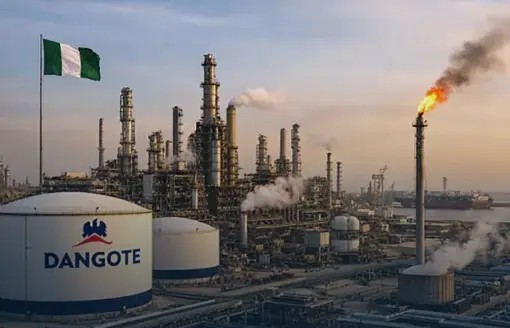
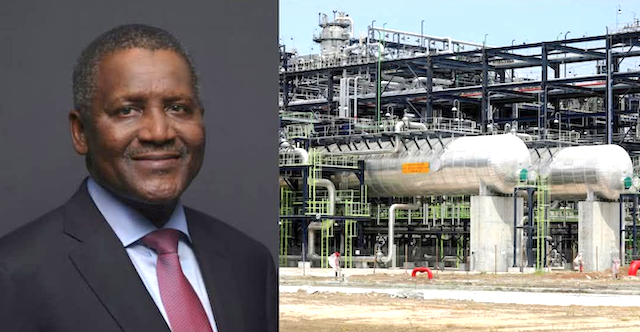
Invest in Dangote Refinery through Petroleum product distribution, Industrial logistics and transportation, LPG and clean-energy distribution, and more. The Dangote Refinery is moving from being primarily a refining project into a broader energy, petrochemical, logistics and export ecosystem. Its current refining capacity is about 700,000 barrels per day, with a planned expansion to 1.4 million barrels per day by 2029. The company also produces petrochemicals and exports products such as jet fuel, diesel and LPG.
Dangote Refinery Business Opportunity Gaps
That expansion creates several business gaps that Nigerian entrepreneurs and investors can target.
1. Petroleum product distribution
One of the clearest opportunities is downstream distribution.
As refinery output increases, there will be greater volumes of petrol, diesel, aviation fuel and LPG moving through Nigeria and into other African markets. Businesses that can efficiently handle bulk transportation, storage, retail distribution and last-mile delivery could benefit from this expansion.
The opportunity is particularly strong in underserved regional markets where petroleum logistics remain inefficient.
Business gap: reliable distribution infrastructure outside major commercial centres.
Opportunity: tank farms, petroleum haulage, LPG distribution, fuel stations, aviation-fuel logistics and regional petroleum depots.
2. Industrial logistics and transportation
The refinery’s expansion will require a much larger logistics ecosystem.
This includes:
- Tanker transportation
- Marine logistics
- Warehousing
- Container handling
- Equipment transportation
- Fleet maintenance
- Spare-parts supply
- Industrial cleaning
- Security and facility services
The refinery itself has already developed substantial marine and storage infrastructure, but its growing output creates opportunities for companies that can provide supporting services around the wider supply chain.
Investment lesson: entrepreneurs should look beyond the refinery gate. The companies supplying the refinery, transporting its products and servicing its infrastructure can also become beneficiaries.
3. Petrochemical manufacturing
This could become one of the highest-value opportunities.
The refinery is developing beyond fuel production into petrochemicals. Its complex includes polypropylene production, with current capacity reported at about 830,000 tonnes per annum.
This creates opportunities for Nigerian manufacturers using petrochemical feedstock to produce:
- Plastic packaging
- Industrial containers
- Pipes
- Agricultural films
- Household products
- Automotive components
- Construction materials
- Medical packaging
Instead of importing finished plastic products, entrepreneurs can potentially build businesses around local conversion of petrochemical feedstock into finished goods.
This is a much more defensible opportunity than simply trading petroleum products.
4. LPG and clean-energy distribution
The refinery’s production of LPG creates another opportunity.
Nigeria has a large population and significant potential for household and industrial LPG consumption. Businesses can build around:
- LPG retail outlets
- Cylinder distribution
- Commercial LPG supply
- Cylinder manufacturing
- Cylinder maintenance
- LPG delivery
- Industrial cooking systems
The important gap is not necessarily producing LPG; it is getting the product efficiently to consumers and businesses.
5. Aviation fuel supply chain
The refinery is already exporting jet fuel, and international disruptions have demonstrated the strategic value of reliable aviation-fuel supply.
That creates opportunities in:
Jet-fuel storage → transportation → airport supply → aviation logistics.
Companies with the necessary regulatory approvals, infrastructure and technical competence could participate in this value chain.
This is a capital-intensive opportunity, but potentially more attractive than ordinary fuel retailing because of the scale of aviation demand.
6. Export businesses
This may ultimately be one of the biggest opportunities.
Dangote is not restricted to the Nigerian market. The refinery is already supplying products to African and international markets, while its expansion is intended to increase its ability to serve regional markets.
That creates opportunities for businesses that support:
- Export documentation
- International logistics
- Maritime transportation
- Commodity trading
- Product distribution
- Trade finance
- Customs services
- Regional warehousing
Business gap: companies capable of efficiently connecting Nigerian petroleum and petrochemical production with African markets.
Read On>> Dangote Refinery Prepares ₦2.15 Trillion Share Offer as IPO Opens September 14
Advice for Investors Considering the Dangote IPO
The IPO is offering 4.1 billion shares at ₦525 per share, potentially raising approximately ₦2.15 trillion. The refinery reported $1.82 billion in after-tax profit in the first half of 2026, compared with a $476 million loss for the whole of 2025.
Those figures are impressive, but investors should avoid making the decision based solely on recent profit.
1. Don’t confuse a profitable company with a cheap stock
This is probably the most important point.
A company can be highly profitable and its shares can still be expensive.
The reported IPO valuation is around $47 billion, meaning investors should assess the price against:
- Earnings
- Free cash flow
- Debt
- Refinery margins
- Enterprise value
- Comparable international refiners
- Expected future earnings
Reuters has noted that analysts have questioned the valuation relative to comparable listed refiners.
Advice: don’t buy simply because the Dangote name is powerful.
Buy only if the underlying valuation makes sense.
2. Treat the ₦525 price as an entry price, not a guaranteed bargain
The IPO price is ₦525 per share. The official IPO site currently confirms the ₦525 price and a minimum subscription of 10 shares (₦5,250), while warning that share values can rise or fall and that investors may not recover their original investment.
The key question is:
What is the business worth at ₦525 per share?
That requires examining the prospectus rather than relying on social-media claims or IPO hype.
3. The expansion is both the biggest opportunity and the biggest risk
The planned expansion from approximately 700,000 to 1.4 million barrels per day could dramatically increase revenue and earnings. The expansion programme is estimated at $14.3 billion.
But doubling capacity also requires enormous capital.
Investors should therefore examine:
- How the expansion will be financed
- Debt levels
- Expected return on the expansion
- Construction timetable
- Cost overruns
- Crude supply
- Refining margins
- Future dividend capacity
My view: the expansion should be treated as an upside opportunity, not as guaranteed future profit.
4. Don’t assume today’s exceptional profit will continue indefinitely
The refinery’s $1.82 billion first-half profit is a major positive signal. However, refining is a cyclical business.
Margins can change because of:
- Crude-oil prices
- Petrol and diesel prices
- Global refinery capacity
- Shipping costs
- Geopolitical events
- Product demand
- Exchange rates
The refinery has benefited from global supply disruptions, which have supported refining economics.
Investors should therefore model the company using normalised earnings, not simply annualise one exceptionally strong period.
5. Look for dividend potential—but don’t buy only for dividends
If the refinery generates strong and sustainable free cash flow, shareholders could eventually benefit through dividends.
However, an expanding company may choose to retain significant cash to finance growth.
Therefore, investors should look at:
Profit → operating cash flow → capital expenditure → debt repayment → retained earnings → dividends.
Profit alone does not determine how much money shareholders receive.
6. Don’t put all your capital into the IPO
Even if you strongly believe in Dangote Refinery, concentration risk remains.
A more disciplined strategy is to divide capital among different asset classes and sectors.
For example:
Core portfolio: established profitable companies
Growth allocation: Dangote Refinery or other high-growth equities
Income allocation: fixed-income instruments
Liquidity: cash or money-market instruments
The exact percentages should depend on your risk tolerance and investment horizon.
7. Consider the indirect investment opportunity
There is another interesting strategy.
Instead of asking only:
“Should I buy Dangote Refinery shares?”
Ask:
“Which Nigerian businesses will make more money because Dangote Refinery is expanding?”
That could reveal opportunities in:
Refinery → petroleum products → transport → storage → distribution → manufacturing → exports.
The biggest long-term wealth creation may occur around the refinery’s ecosystem, not necessarily only through ownership of the refinery itself.
10 Nigerian Businesses That will make more Money because Dangote Refinery is Expanding
| Opportunity | Potential | Capital requirement |
|---|---|---|
| Petrochemical manufacturing | Very high | High |
| LPG distribution | High | Medium |
| Petroleum logistics | High | Medium–High |
| Tank storage | High | Very high |
| Aviation-fuel logistics | High | High |
| Petroleum-product distribution | High | Medium |
| Export/trade services | High | Medium |
| Industrial maintenance | Medium–High | Medium |
| Packaging/plastic manufacturing | High | Medium |
| Fuel retailing | Medium | Medium |
Bottom line
For entrepreneurs: the biggest gap is the ecosystem around the refinery—logistics, storage, petrochemicals, LPG, manufacturing and exports. Businesses that add value between the refinery and the final customer could capture significant opportunities as capacity expands.
For investors: Dangote Refinery has a compelling growth story, but a good company is not automatically a good investment at every price. The most important things to examine before subscribing are the IPO valuation, normalised earnings, debt, free cash flow, expansion financing, dividend policy and refining margins.